Seats, usage or outcomes? Pricing SaaS when AI does the work

Per-seat pricing has been the default in SaaS for twenty years, for a good reason: it's simple, predictable, and for most tools value really did grow with the number of people using them. Ten people using a project management tool get more out of it than two.
AI breaks that assumption. When software does part of the work that people used to do, customers need fewer seats to get the same result, or more. Your product becomes more valuable while your invoice gets smaller. If that sounds like a problem for later, look at your contraction numbers. For some companies it's already showing up there.
What happens to seat revenue
Here's an illustrative example (not real data). A customer has 20 seats on a $50 per seat plan: $1,000 MRR. Over two years, your product's AI features take over a growing share of the routine work. The customer handles twice as much volume, with a team that shrinks to 12 people.

Under seat pricing, that customer now pays $600 instead of $1,000: a 40% contraction, from a customer who's getting more value than ever. Under a model tied to the work itself, the same customer would be paying more. Multiply that across your customer base and you can see why so many companies are rethinking their price metric.
The three models, and the hybrid
Per seat. You charge for each person who uses the product. It's predictable for both sides and easy to understand. It works well when the value really is tied to people: collaboration tools, tools a person spends their day in. It works badly when the product replaces work rather than supporting it.
Per usage. You charge for what gets used: API calls, messages, documents processed, compute. It scales with value in products where volume is the value, and it lowers the barrier to start. The downside is that revenue gets less predictable, for you and for your customer's finance team.
Per outcome. You charge when a specific result happens: a resolved support conversation, a qualified lead, a completed task. It's the purest alignment with value, and it's where a lot of AI products are heading. Intercom, for example, prices its Fin AI agent per outcome ($0.99 per outcome at the time of writing). It only works if the outcome is clearly defined, measurable, and mostly caused by your product.
Hybrid. Most real pricing ends up here: a platform fee or a small number of included seats, plus a usage or outcome component on top. You keep a predictable base and let revenue grow with the value delivered.

How to choose
Ask one question: what does the customer actually buy? If the honest answer is "access for my team", seats are fine. If it's "capacity", charge for usage. If it's "a result", charge for the result, if you can measure it reliably.
A few practical tests:
- Would a customer be happy to pay more when they use it more? If yes, a usage or outcome component is safe. If more usage would feel like a penalty, keep it in the base price.
- Can the customer predict their bill? Finance teams hate surprises. Caps, committed tiers and alerts make usage pricing much easier to buy.
- Can you measure the outcome without arguing about it? If there will be a dispute every month about what counted, outcome pricing will cost you more in trust than it earns.
What it does to your metrics
Changing your price metric changes how your revenue behaves, and your reporting needs to keep up.
MRR gets noisier. With usage, revenue moves every month. Committed or minimum amounts behave like classic MRR. Variable usage on top is real revenue, but you have to decide how to count it. We wrote a full post on whether usage-based revenue can be counted as MRR, and the academy covers usage-based pricing and metered revenue.
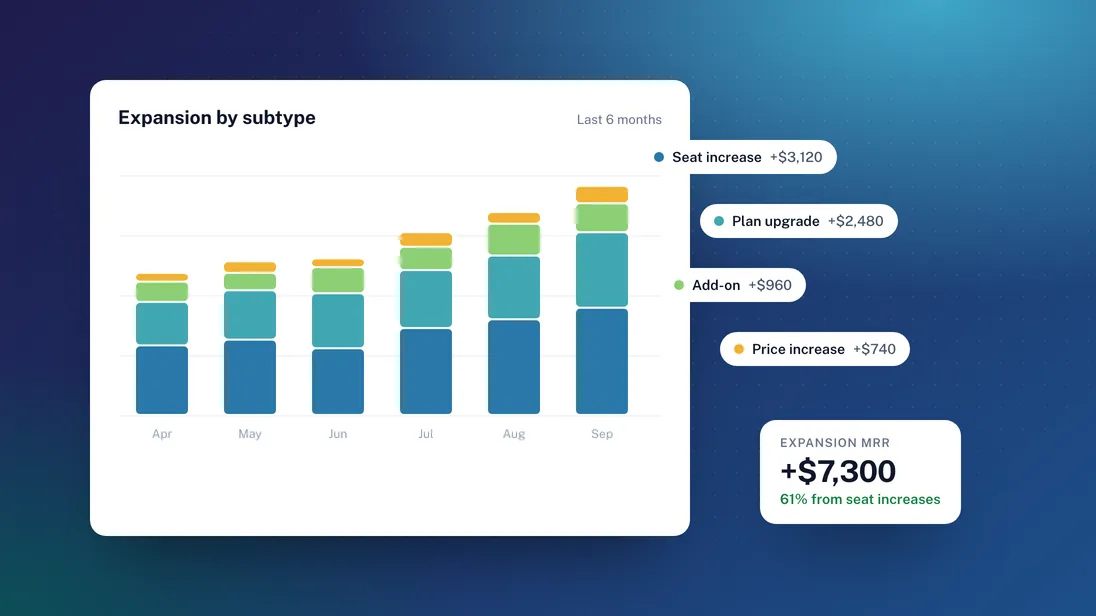
Expansion and contraction change shape. Under seats, expansion is someone adding a user. Under usage, it's a customer growing. It's worth splitting expansion into its causes, which is what the MRR subtypes report in GrowPanel does: it separates plan upgrades, add-ons, extra seats and discounts ending, and splits contraction the same way.
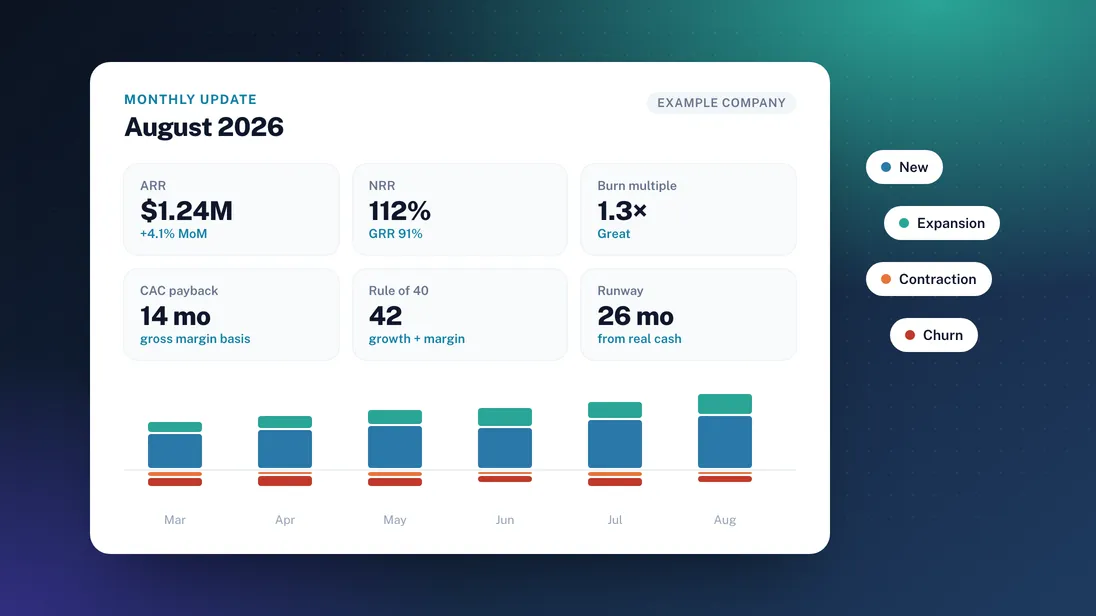
NRR becomes the number to watch. The whole point of moving away from seats is that revenue follows value. If you get it right, net revenue retention should go up, because growing customers pay more automatically. If NRR drops after the change, the new metric isn't capturing the value you think it is.
If you're moving away from seats
- Grandfather existing customers or give them a long runway. A pricing change that feels like a bait and switch costs more in churn than it earns.
- Start with new customers and compare cohorts before you migrate everyone.
- Keep a predictable base. A hybrid is easier to buy and easier to forecast than pure usage.
- Model it first. Take your current customers, apply the new pricing to their actual usage, and look at the distribution of winners and losers before you announce anything.
Watching contraction, expansion by subtype and NRR by cohort is exactly what GrowPanel is built for. If you're weighing a pricing change, take a look at the live demo or connect your billing system for free and see how your customers behave today, before you change anything.

Founder & CEO
Lasse is the founder of GrowPanel. He previously founded Mouseflow, scaling it from $0 to $10M ARR before exiting. He also co-founded Soundvenue and actively invests in SaaS startups.
View full profile →